Secure loop in the end of 3 or 4-strand rope.
Eye Splice
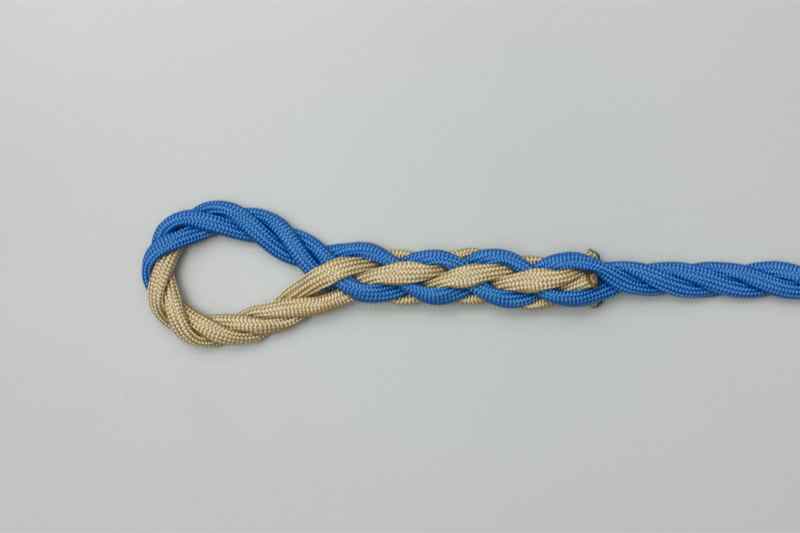
Secure loop in the end of 3 or 4-strand rope.
 |  |
1
 |  |  |  |  |
To Step use Arrow Keys ( ). Set Speed using 1 – 5.
Tape rope. Unravel enough for 5 tucks (4 shown here). Arrange strands. Pass center one under a standing strand. Pass lower one under lower adjacent standing strand. Pass the upper strand under the upper adjacent standing strand. Repeat the process for the remaining sets of tucks. Remove the tape.
Important: The Eye Splice and its variants are well described by Ashley (ABOK # 2725, p 445). Modern synthetic materials, however, tend to be slippery and, now, a minimum of five complete “tucks” is required. For mooring, towlines, and other long term or critical applications, seven tucks are recommended. The animation only shows the threading of two complete tucks with the final image showing four tucks finished and tightened.
Esssential Preparation: Secure the end of each strand by heat, tape or whipping twine. Measure the length to be unraveled and secure the rope at that length with tape or twine. The correct length to unravel is about 3 times the diameter per “tuck”, i.e., for five tucks in half inch diameter rope, leave the free strands at least 7.5 inches long; and for seven tucks at least 10.5 inches. Create the required size of loop and mark the rope. In the animation the mark would be where the first tuck of the Eye Splice is to be threaded.
Technique: In tightly laid or large diameter rope, it may be difficult or impossible to pass each strand under the standing strand without a suitable tool. The following have all worked for me under different circumstances:
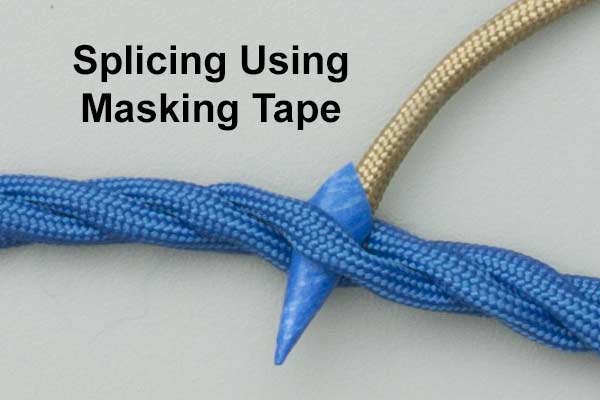
Tape: One of the simplest methods is to merely wrap each end in masking tape. This can provide you with a short “spike” to help feed each strand under the standing end.
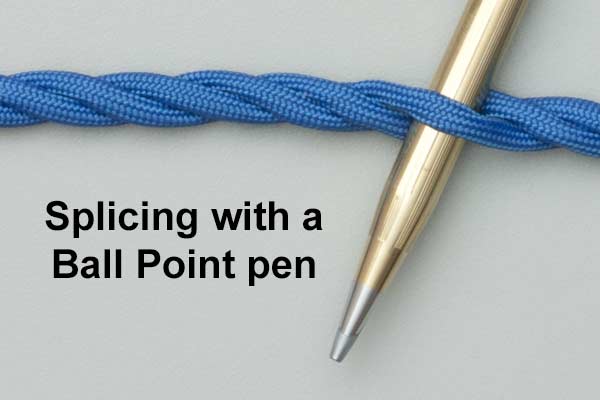
Spike: Alternatively, use a suitable spike to open up a standing strand. It may stay open long enough for the strand to be threaded. I have used many different spikes including marlinspikes, pencils, pens, and needle nosed pliers.
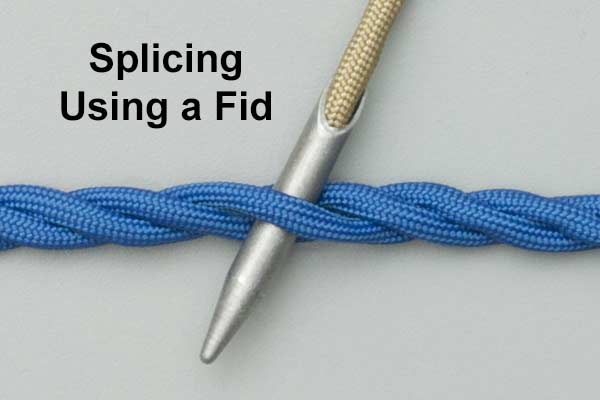
Fid: The best tool is undoubtedly a fid, a spiked aluminum bar with a hollow end, which opens up the standing strand. You then push the strand through inserted in the tail of the fid.
Structure As in weaving, each of the strands is passed first under and then over alternate standing strands. In the process, the free ends tend to untwist and become untidy. Handle each strand with care to retain its original twist. After each strand is threaded, it is helpful to twist it to keep its original form. However, after the first set of tucks, the strands should be allowed to spread and fit the form of the standing strands.
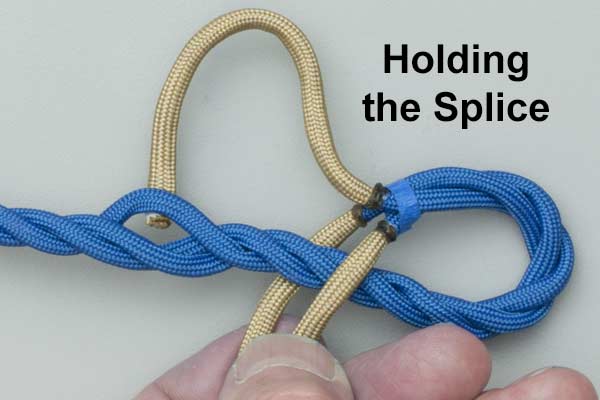
Holding the Rope: Having prepared the ends and chosen which strand to thread where, it is then all too easy to get confused after it is threaded. Hold the other two tails in your hand, one each side of the rope; they will then be in the correct place when you want to choose the next end to thread.
Finishing the Splice: If the ends have been cut to the correct length, they will be used up in the splice. If they are a little too long, it is usually far less trouble to make another tuck than to cut them and re-burn them to stop them unraveling. The burned ends are usually slightly larger than the strand and this provides some additional security for the Eye Splice.
Tapering the tails: It used to be fashionable to gradually thin the strands for an additional few tucks. In tarred hemp this made a very elegant tapered splice. Modern rope is sufficiently slippery to mean that the tapered tails tend to get dislodged and make the splice look very untidy. True tapering of individual strands is rarely done now and should probably never be attempted by amateur, occasional, splice makers.
Alternative Taper: After sufficient tucks have been made for strength, cut and burn one strand and then continue the Eye Splice with the remaining two strands. Cut and burn one more and splice the remaining strand before cutting and burning it too.
VIDEO