Tie the Constrictor knot using the twisting method.
Constrictor Knot (Twisting Method)
Tie the Constrictor knot using the twisting method.
 |  |
1
 |  |  |  |  |
To Step use Arrow Keys ( ). Set Speed using 1 – 5.
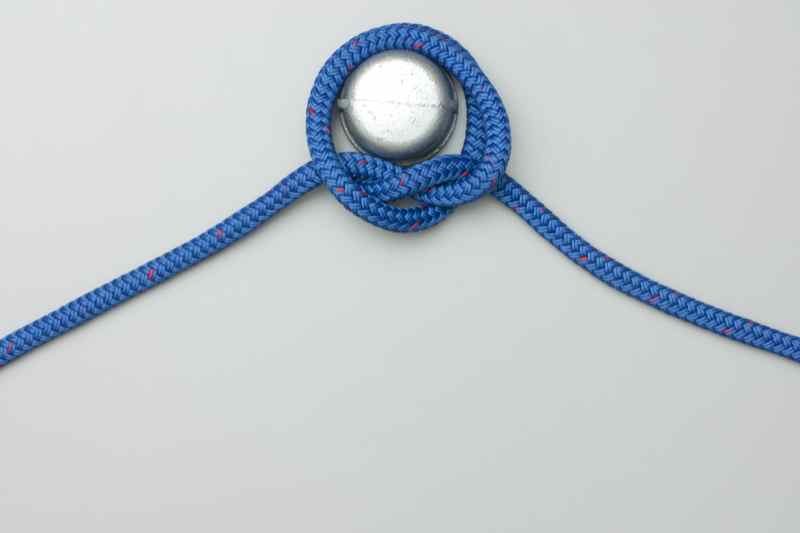
Twist the rope to form a loose figure 8. Fold the loops down around the center to form the Constrictor Knot.
Constrictor Knot (Twisting Method) Details
Found in: Boating, Horse & Farm, Household, Scouting
Also known as:
Constrictor Knot (Twisting Method)
Found in:
Boating, Horse & Farm, Household, Scouting
Also known as:
Uses: The Constrictor Knot (ABOK # 1188, p 216.) deserves to be much more widely known and used. It is an excellent quick temporary whipping for a fraying rope’s end and can be used to keep a rope’s end together while it is being whipped. It securely ties the neck of a sack or bag; it has been used as a temporary hose clamp; and it can be used to hold items together for gluing.
Alternatives: In addition to the Twisting Method shown here, the Constrictor Knot can be tied by the Folding Method, and by Threading the End when tying this knot round a rail or bar.
Using the Twisting Method: The Twisting Method is quick and convenient and can be used even for short lengths, e.g., when using a piece of twine to secure a fraying rope’s end. However, when the twine or rope has to be first passed around an object, then the Threading the End Method has to be used.
Disadvantages: The Constrictor Knot fails when tied against a flat surface – it requires a curved surface for the binding turn to grip the Half Hitch.
Release: The Constrictor Knot can be very hard to undo – cutting the knot can be the only option. When this is necessary, the binding strand should be cut over the other constrictor strands, using them to protect your rope.
Rope Size: The pictures here show the rope tied in large diameter rope. This is only for the photography. The Constrictor Knot is normally tied in twine or other small diameter line.
VIDEO