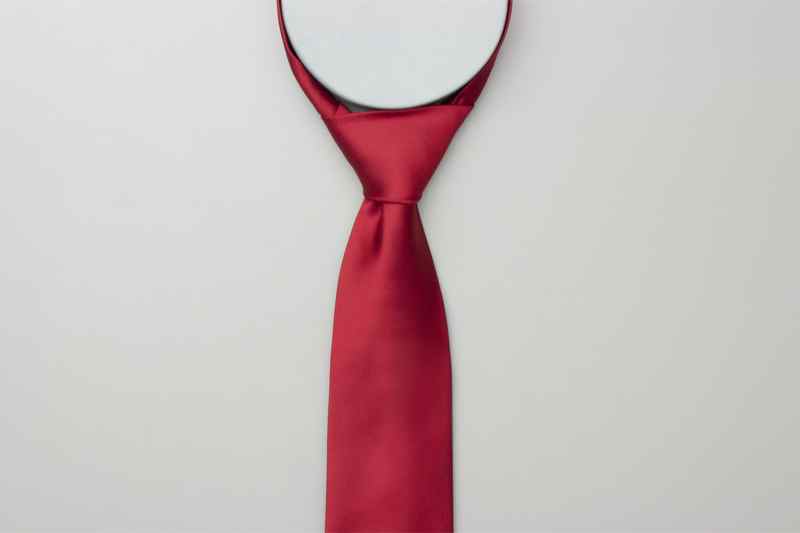
Produces a bulky, symmetrical, Necktie Knot.
Windsor Necktie Knot
Produces a bulky, symmetrical, Necktie Knot.
 |  |
1
 |  |  |  |  |
To Step use Arrow Keys ( ). Set Speed using 1 – 5.
Pass the long end over and around the short end. Continue behind the short end and wrap around the opposite side. Cross in front, pull up and forward by the neck, and then down under itself. Pull the long end to tighten the knot, then the short end to make snug against the neck.
Origin: Ashley does not describe either this Windsor Necktie Knot or the Half Windsor Necktie Knot. The names were created in honor of the Duke of Windsor although he preferred a Four-in-Hand himself. However, he employed heavier material to obtain a satisfactory appearance.
Orientation: The animation is presented as though the wearer were seeing his own reflection.
Name: This knot is properly called the “Windsor”. However, to distinguish it from the “Half Windsor” it has sometimes been called the “Full” Windsor.
Structure: The Windsor is bulky and symmetrical because the long end is wrapped around both sides before it is used to form the final knot. There are at least four variations; the version chosen for the animation is one of the more common.
Advantages: The Windsor Necktie Knot makes a larger and more symmetrical knot. Also, for the version shown here, when the short end is pulled out, the knot does not require untying, it just falls apart – a pleasant surprise for this more complicated knot.
Disadvantages: The Windsor Necktie Knot is more difficult to tie and uses more material than the Four-in-Hand, the Pratt (Shelby) or the Half Windsor Necktie Knot. The Windsor is less suitable for shorter ties.