








No results found.


No results found.
Welcome to Climbing Knots
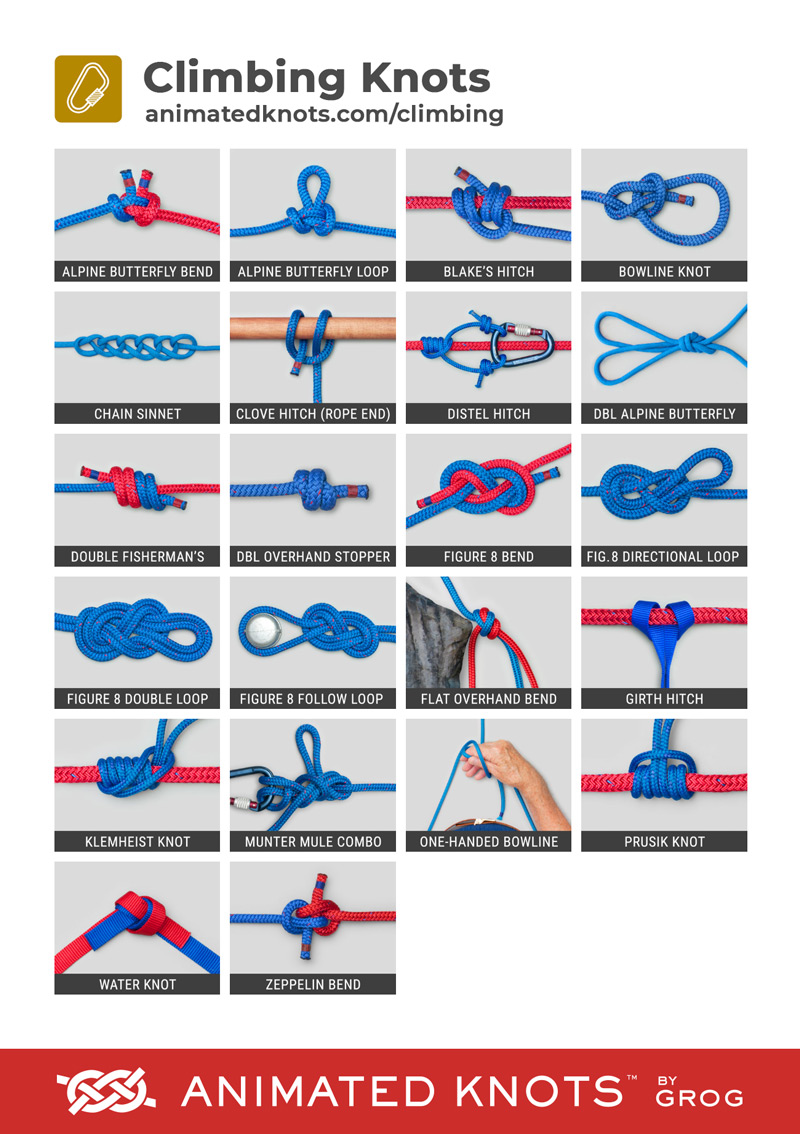
These animated knots are for climbers, rescue workers, arborists, tower-climbers, and others who use rope in man-carrying applications.
Selection
This selection is based on consultation with, and feedback from, many experienced climbers.
Omissions
The Overhand Knot and the Figure 8 Knot, which both underlie other Climbing Knots, are included in the Basics Section.
Deaths
Climbing, caving, etc., are challenging and dangerous. The American Alpine Club's Statistical Tables for North America report over 30 deaths a year for the last 55 years. This website is about knots. It is no substitute for thorough instruction and expert supervision. Knots and anchoring techniques used for rappelling must be checked, checked again, and appropriate. For example, a quick-release hitch, e.g., a Highwayman's, must never be used for rappelling.
Climbing Ropes
A climbing rope is typically about 60 meters, or 200 feet, long. However, longer ropes are available, up to and in excess of 85 meters. Climbing ropes have changed greatly with the introduction of newer materials. Today's ropes are stronger, lighter, and thinner and come with different characteristics:
Static ropes are more durable, more resistant to abrasion, and lack elasticity. They should only be employed where shock loading never occurs: rapelling (abseiling), spelunking, or canyoning. They can be used to belay a climber. However, a lead climber should never employ a Static rope: in a fall, the rope lacks the required elasticity to minimize injury. Manufacturers typically use only two colors for the sheath.
Dynamic (Climbing) Ropes stretch under a shock load, absorb some of the shock force to protect the climber. They are designed to belay a lead climber or for top-roping. Manufacturers typically use three or more colors for the sheath to distinguish them from static ropes.
Links
To read more about climbing/caving ropes and their care go to the Outdoor Adventure Network Article on Climbing Rope; Indoor Climbing's Article on Rock Climbing Ropes; Rock Climbing's article on Climbing Ropes Explained.
Testing and Caution
For details about testing rope, knots, and gear, go to Tom Moyer's Website and A scientific study of common friction knots. The latter article stresses the unpredictability of various combinations of knots and ropes. Accordingly always test your own selection of knots and ropes.
Modern Alternatives
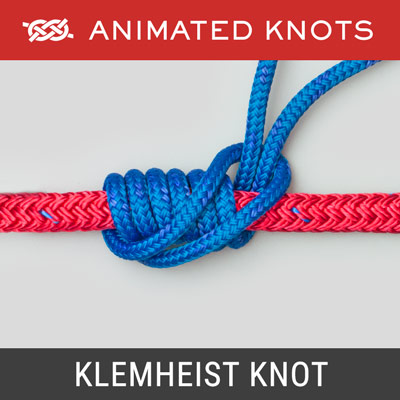
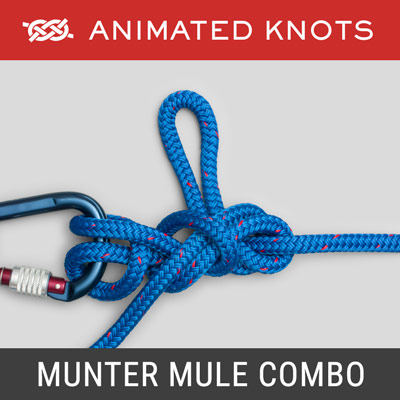
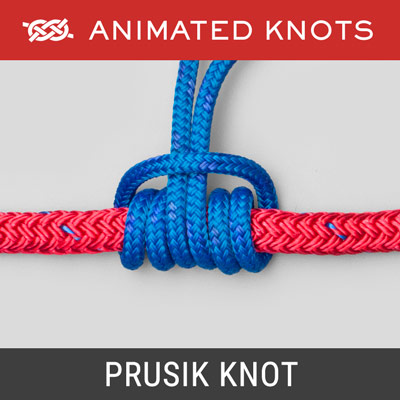
Descent devices such as Brake Bar Racks and "8" rings are kinder to the Static rope and easier to manage than a Munter Hitch. In addition, various devices are available to use instead of the Prusik Knot or the Klemheist. However, in an emergency, the knots described here are reliable, trusted alternatives which require only a locking carabiner.
Learn Your Knots: The Life They Save May Be Your Own
Which Knot Should I Use?
Joining Two Ropes
Reliable join which is easy to undo
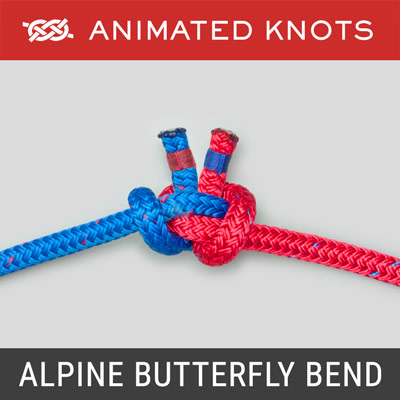
Bend based on Alpine Butterfly Loop
Join two ropes – compact, neat knot
Join ropes based on familiar Fig 8 knot
Make a Loop in a Piece of Rope
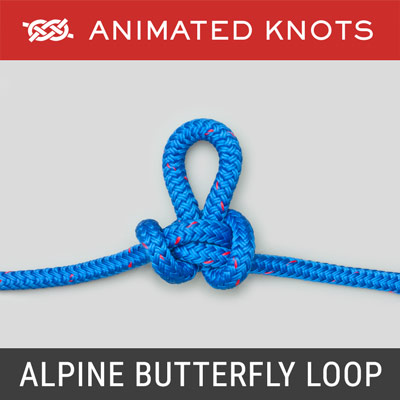
Make a loop in middle of piece of rope
Pair of loops in middle of piece of rope
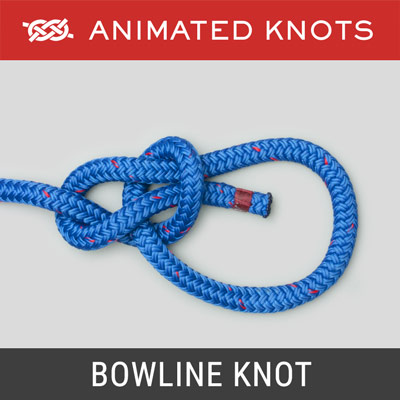
Loop in the end of a piece of rope
Loop in rope end using one hand
Secure a figure-8 loop to a ring or bar
Double loop in middle of a rope
Loop in rope for pull in one direction
Coil Rope to Prevent Tangle
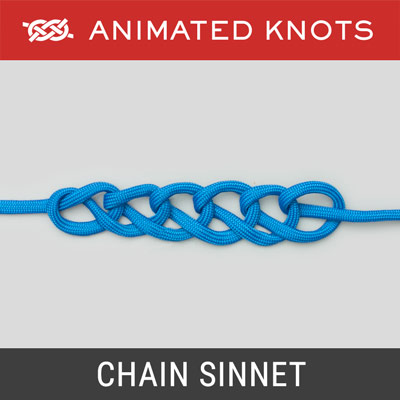
Make chain to shorten rope
Rapelling (Abseiling)
Knot for controlled descent (or ascent)
Loop Hitch for Climbing a Rope
Join avoids catching during descent
Slide and Grip Knots
Slide and Grip Loop – one direction
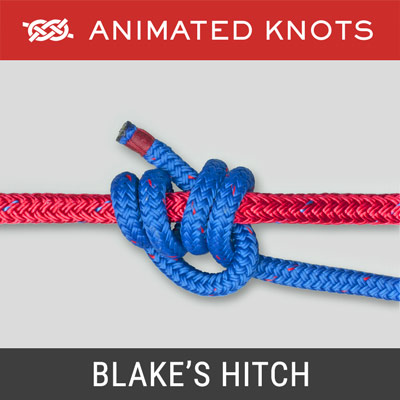
Slide and grip used by arborists
Slide and Grip Loop, either direction
Slide and Grip Knot, using rope end
Webbing Knots
Join the ends of two pieces of webbing
Attach webbing loop to harness
Make Knot on Rope's End
Reliable stopper knot